
About
Dr. Sameen Haque
MBBS, MMed, FRACP, PhD
Consultant Neurologist and Neurophysiologist
Dr Sameen Haque is a Consultant Neurologist with subspecialty expertise in neuromuscular and neurogenetic disorders, including mitochondrial disease. She has advanced skills in clinical neurophysiology and the therapeutic use of botulinum toxin for a range of neurological conditions including migraines, dystonia, spasticity and hyperhidrosis.
Her clinical interests/expertise include:
- Neuromuscular and neurogenetic disorders
- Clinical neurophysiology: nerve conduction studies (NCS) and electromyography (EMG)
- Botulinum toxin therapy for neurological conditions
- Multiple sclerosis and neuroinflammatory disorders
- Headaches and general neurology
- Neurological care in pregnancy
Dr Haque completed her physician training at Westmead Hospital, followed by advanced neurology training across Nepean and Canberra Hospitals, gaining broad experience in acute and general neurology. She subsequently undertook a dedicated Neuromuscular Fellowship at Royal North Shore Hospital, refining her expertise in neurophysiology and complex neuromuscular and genetic conditions.
She holds a Master of Medicine (MMed) in Clinical Epidemiology and a PhD from the University of Sydney, focused on the healthcare burden and clinical drivers of resource utilisation in adults with mitochondrial disease. Her work has been recognised with the Mito Foundation Excellence in Research Award.
Dr Haque is a Staff Specialist Neurologist at Nepean Hospital, where she leads the Neurophysiology Service. She is a Neurology Advanced Trainee Supervisor and is actively involved in teaching, mentorship, and ongoing clinical research, continuing to spearhead research initiatives within the department.
She is committed to delivering thoughtful, evidence-based, and patient-centred neurological care across a wide spectrum of conditions.

ROLE OF A NEUROLOGIST
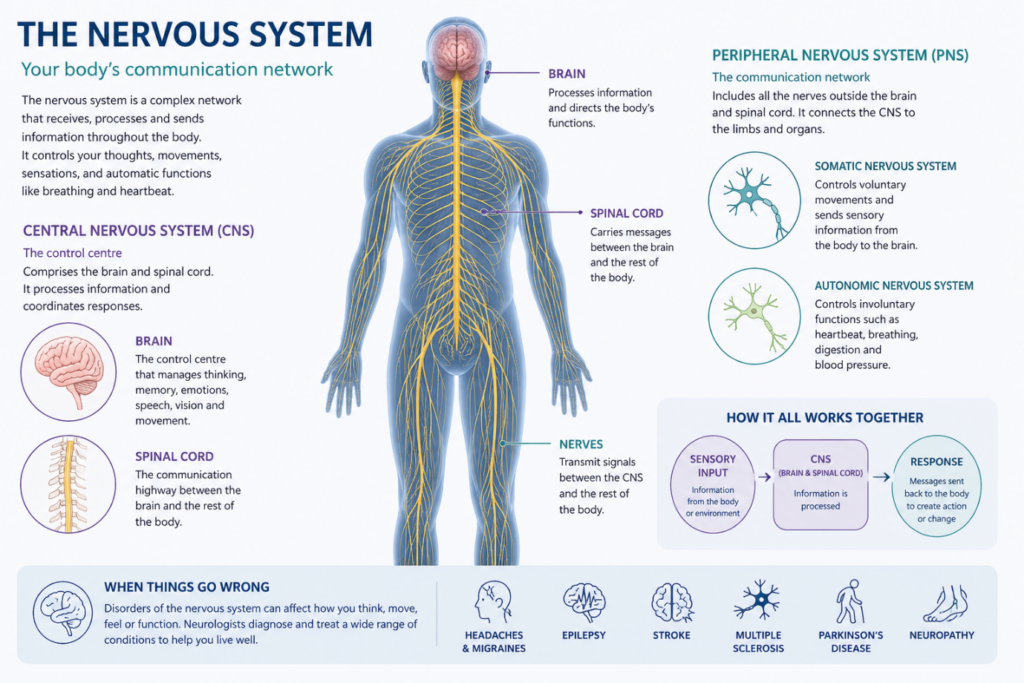
A neurologist is a specialist doctor focused on the brain, spinal cord, nerves, and muscles—the body’s intricate communication network. When this system is disrupted, it can affect how we move, feel, think, see, and function day to day.
Neurologists diagnose and manage a wide range of conditions, including migraines and headaches, epilepsy, stroke, multiple sclerosis, Parkinson’s disease, neuropathy, and neuromuscular disorders. Through careful clinical assessment, and when needed, specialised tests such as nerve conduction studies, imaging, and electrophysiology, they work to uncover the “why” behind symptoms and guide the best path forward. Examples of commonly encountered neurological conditions are listed below; although this list is not exhaustive.
- Migraine: More than “just a headache” — a neurological condition causing severe pain, often with nausea, light sensitivity, and visual changes.
- Epilepsy: A tendency to have recurrent seizures due to bursts of abnormal electrical activity in the brain.
- Stroke: A medical emergency where blood flow to part of the brain is interrupted, affecting speech, movement, or vision.
- Multiple sclerosis (MS): An immune-related condition where the brain and spinal cord signals are disrupted, leading to varied neurological symptoms.
- Myasthenia gravis: An autoimmune disorder causing muscles to tire easily, often affecting the eyes, face, and swallowing.
- Parkinson’s disease: A progressive condition affecting movement, often causing tremor, stiffness, and slowed motion.
- Peripheral neuropathy: When the nerves in the hands and feet don’t signal properly, leading to numbness, tingling, or pain.
- Carpal tunnel syndrome: A common nerve compression at the wrist causing tingling, numbness, and hand weakness.
- Radiculopathy (pinched nerve): Nerve irritation from the spine causing pain, tingling, or weakness down an arm or leg.
- Motor neurone disease (MND): A condition affecting the nerves that control muscles, leading to gradually increasing weakness.
- Dementia: A group of conditions affecting memory, thinking, and independence in daily life.
At our specialist rooms, we combine clear diagnosis with thoughtful, personalised care. Our goal is not only to treat neurological conditions, but to help you understand them—so you can manage symptoms with confidence and maintain the best possible quality of life.
Conveniently Located in Bella Vista
Address
Suite 106B, Q Central Level 1, 10 Norbrik Drive Bella Vista NSW 2153